
Insights from the LINEup seminar in Lisbon, 16 October 2026
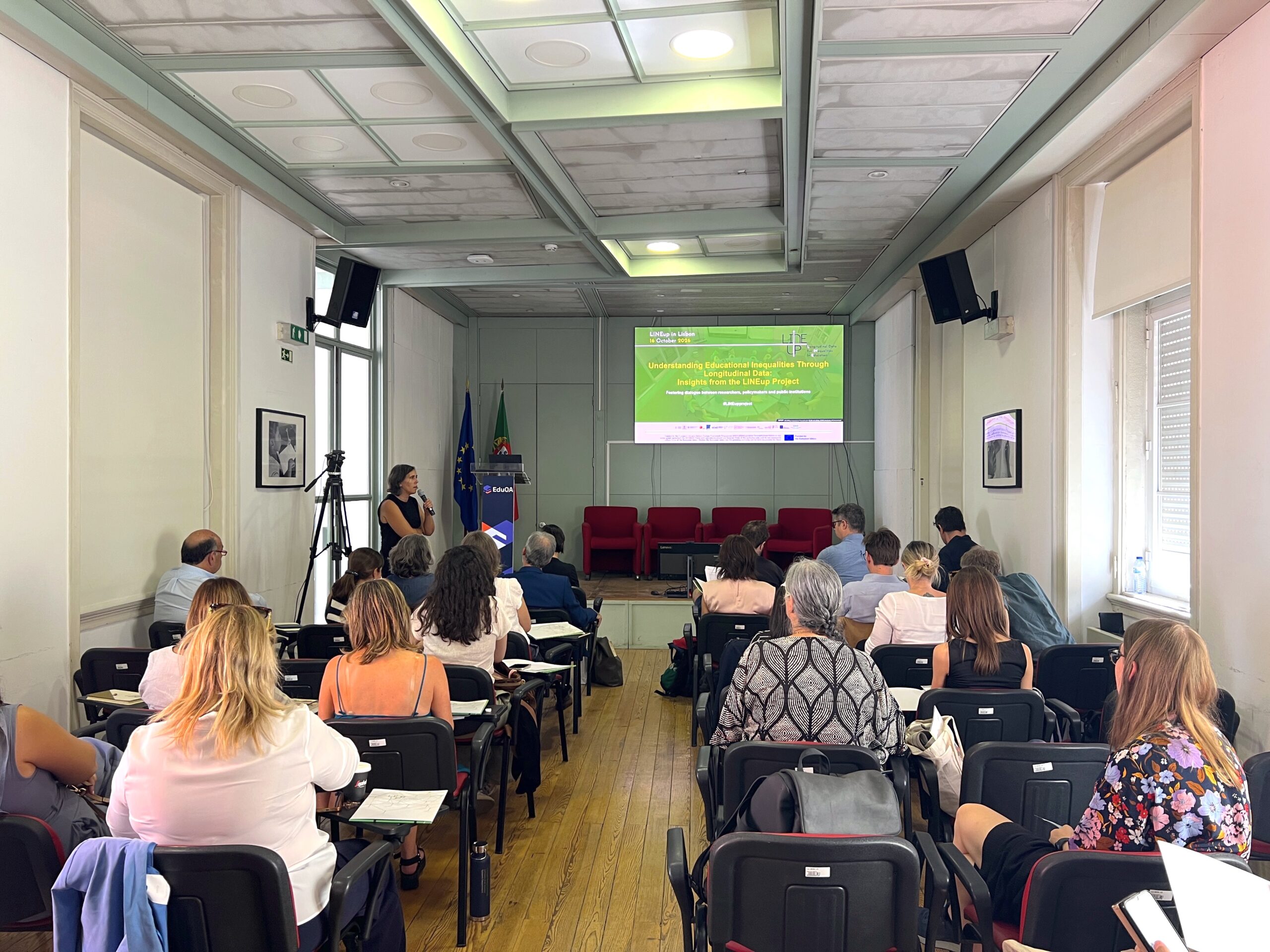
A photograph shows where students are; a film reveals how they arrived there. This simple image set the tone for the public seminar “Understanding Educational Inequalities through Longitudinal Data: Insights from the LINEup Project”, held in Lisbon on 16 October 2026 and hosted by EduQA and the Universidade de Trás-os-Montes e Alto Douro (UTAD).
Researchers, policymakers and representatives of public institutions gathered for an afternoon moderated by Anabela Serrão, Member of the Board of EduQA, around a straightforward question: what can we discover when we follow the same students over several years instead of observing them only once?
A hidden wealth of data
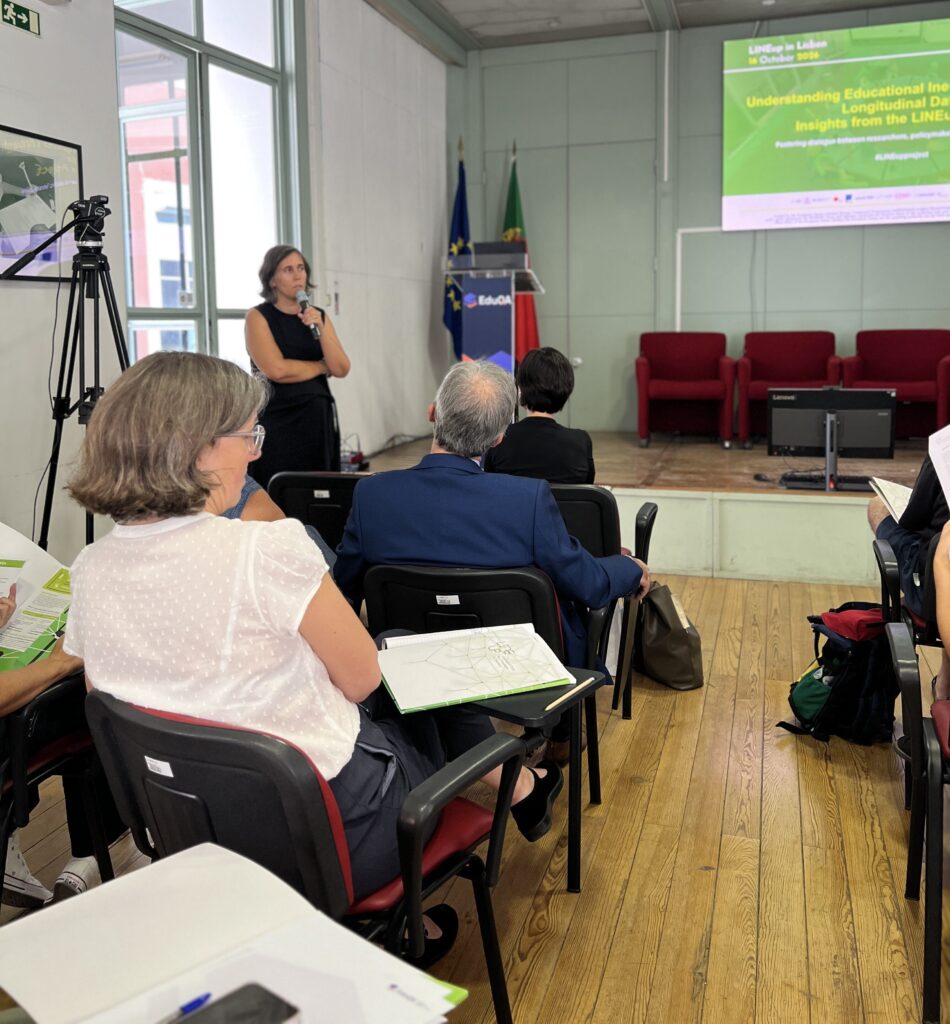
After opening remarks, Martina Vitalone of Fondazione per la Scuola introduced LINEup and traced the project’s journey since 2024.
Emmanuele Pavolini of the University of Milan highlighted one of the project’s main findings: Europe has far more longitudinal education data tracking than is commonly recognised. LINEup identified more than 100 datasets across Europe, yet many remain little known, difficult to access or challenging to compare.
To bring this hidden wealth of information into view, Ilaria Lievore of Fondazione per la Scuola presented the LINEup Education Data Explorer, a free online tool that makes it easier to discover available datasets and explore their characteristics.
Comparing countries: possible, with care
Can data from different countries be placed side by side? Veronica Mobilio of Fondazione per la Scuola explained the challenges of comparing national longitudinal datasets, which differ in their design, coverage and assessment measures. Creating a single European dataset is not realistic because countries assess students in different ways and at different stages, but LINEup has developed a common analytical framework that allows researchers to address shared questions using national data. This is the approach underpins the forthcoming LINEup book, Educational Inequality in Europe: A Longitudinal and Comparative Perspective, which will be published next year.
Three countries, three stories
The central part of the seminar explored three national cases, each presented by a researcher from the country concerned and discussed by an expert from another national context.
Greece – when a closing gap is not always good news
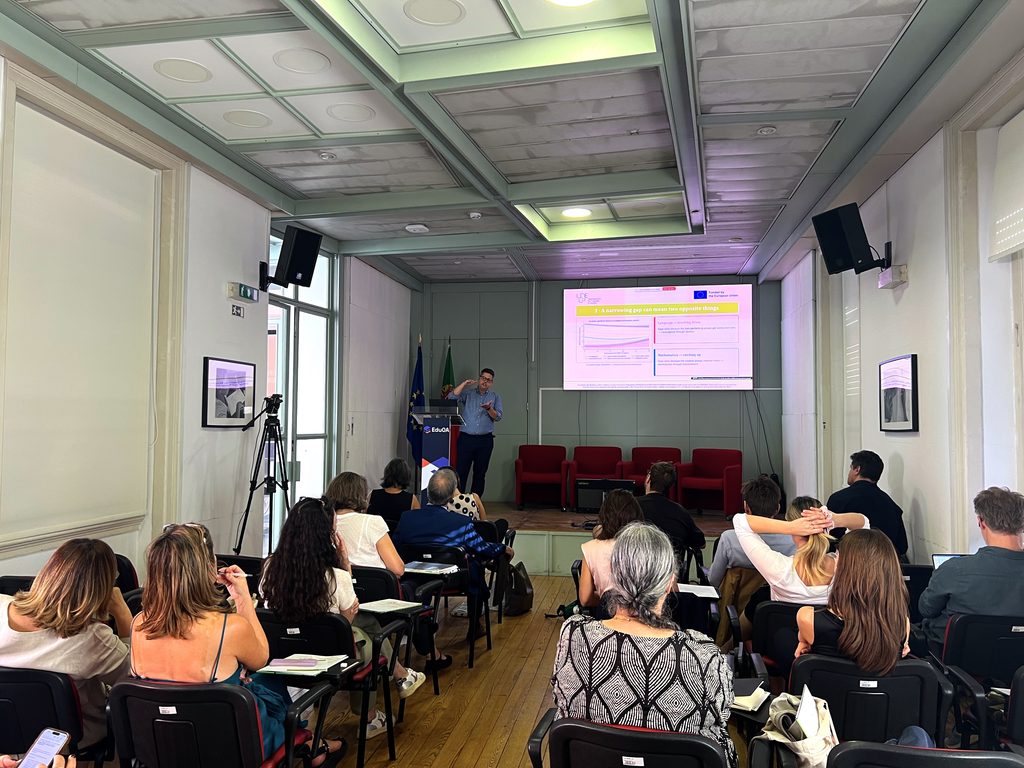
Nikolaos Kanellopoulos of KEPE showed that differences associated with gender, nationality and family background are already visible when students enter secondary school. Although most gaps diminish over time, this does not always happen for positive reasons: in mathematics, students who begin behind catch up, whereas in language the gap can narrow because the strongest students lose ground. Most differences occur among classmates within the same classroom rather than between schools, suggesting that early support delivered inside the classroom is especially important.
Portugal – persistent, but not the same for everyone
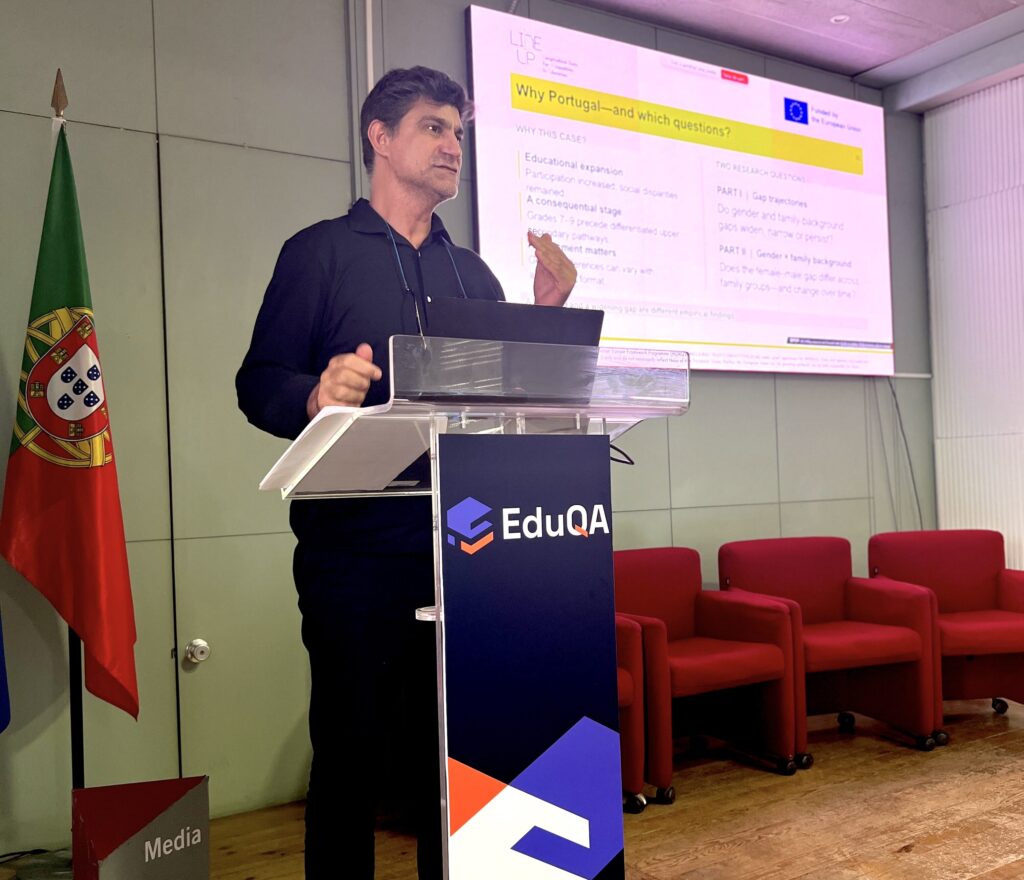
Paulo Moreira of UTAD followed students through the three years preceding their choice of pathway in upper-secondary education. His findings highlight the persistence of inequalities associated with family background: children whose parents hold a university degree perform substantially better, with gaps changing little over time. Girls receive higher grades than boys, especially in Portuguese. The findings also reveal important differences within the migrant-background population, challenging the idea that migrant students form a homogeneous group. As Moreira concluded, a persistent gap is not necessarily one that cannot be closed.
Spain – does the type of school make a difference?
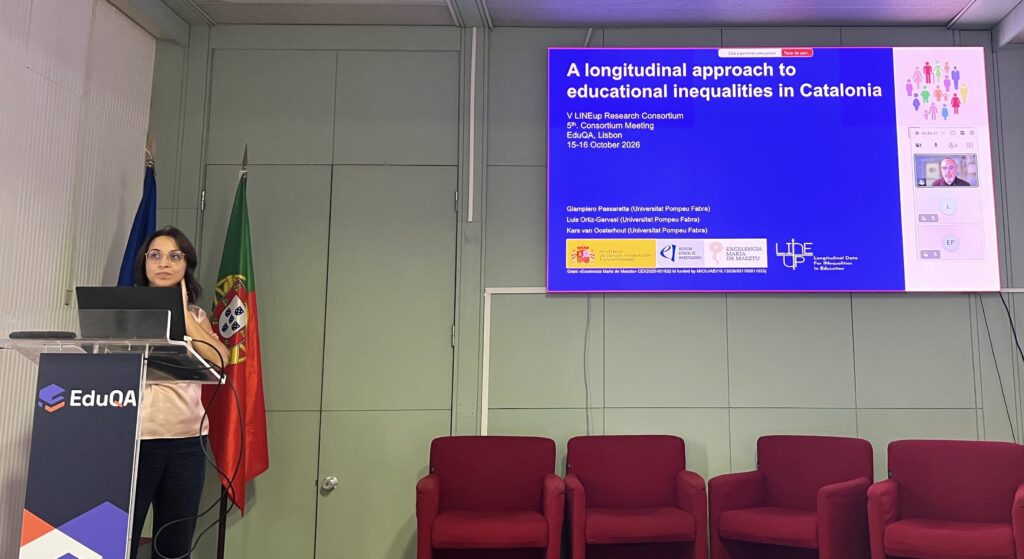
Luis Ortiz Gervasi of Universitat Pompeu Fabra examined Catalonia, following students from the end of primary education to the end of compulsory schooling. His findings show widening gender gaps in languages and persistent disadvantages associated with migration background and socioeconomic status. Students in publicly funded private schools perform better on average, but much of this difference is associated with the more advantaged social composition of their student populations, rather than necessarily greater school effectiveness.
What have we learned?
Closing the seminar, Veronica Mobilio drew together three main lessons:
- Time matters. To address inequality, we need to understand when gaps appear, how they develop and at what point they may still be reduced.
- Comparing countries is possible, but requires care. Each country’s data tell a distinct story, and differences between education systems must be taken into account.
- Numbers alone are not enough. Understanding how schools experience and address inequality also requires listening to them, which is why LINEup has worked directly with schools in six countries.
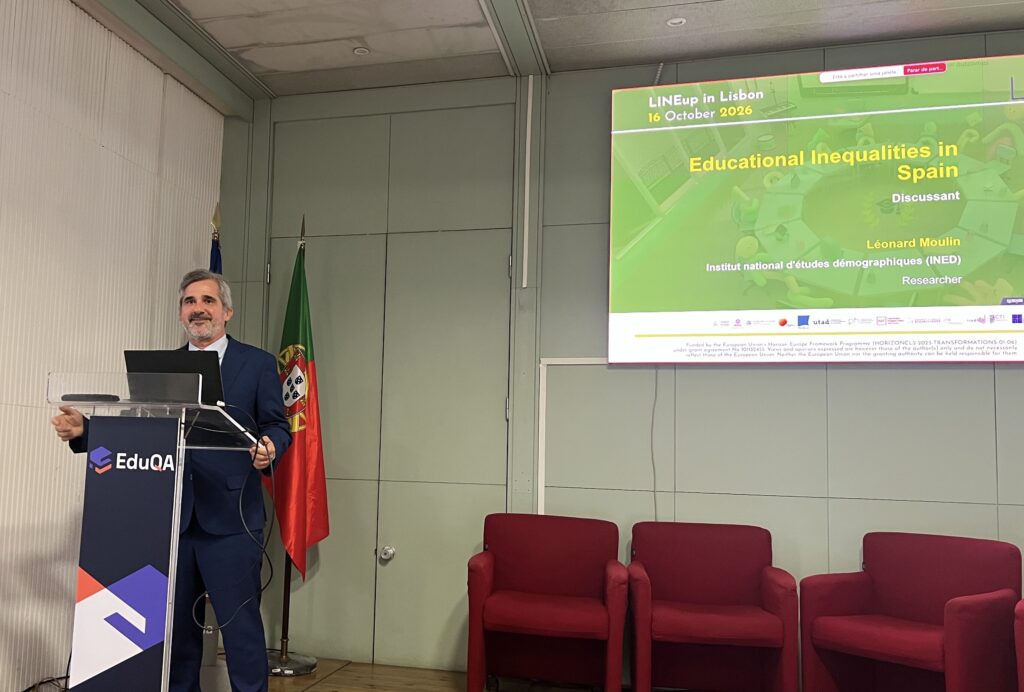
The afternoon concluded with closing remarks from Nuno Rodrigues, General Director of DGEPA, who emphasised the importance of bringing researchers, policymakers and education stakeholders together to exchange experiences and learn from the different types of evidence available across Europe. He also highlighted the value of high-quality longitudinal data, which allow us to move beyond isolated snapshots and follow students’ trajectories over time, helping policymakers understand when inequalities emerge and design more targeted interventions to address them.
Next stop: Paris
The conversation that began in Lisbon will continue at the LINEup Final Conference, “From Longitudinal Evidence to Educational Action”, on 28 January 2027 at Campus Condorcet in Paris, hosted by INED. Researchers, policymakers and schools will come together to translate the project findings into concrete recommendations. Participation is free, but registration is required by 11 December 2026: Register for the LINEup Final Conference
- Discover the LINEup Education Data Explorer: LINEup Education Data Explorer
- Read LINEup’s reports and policy briefs: Reports and policy briefs