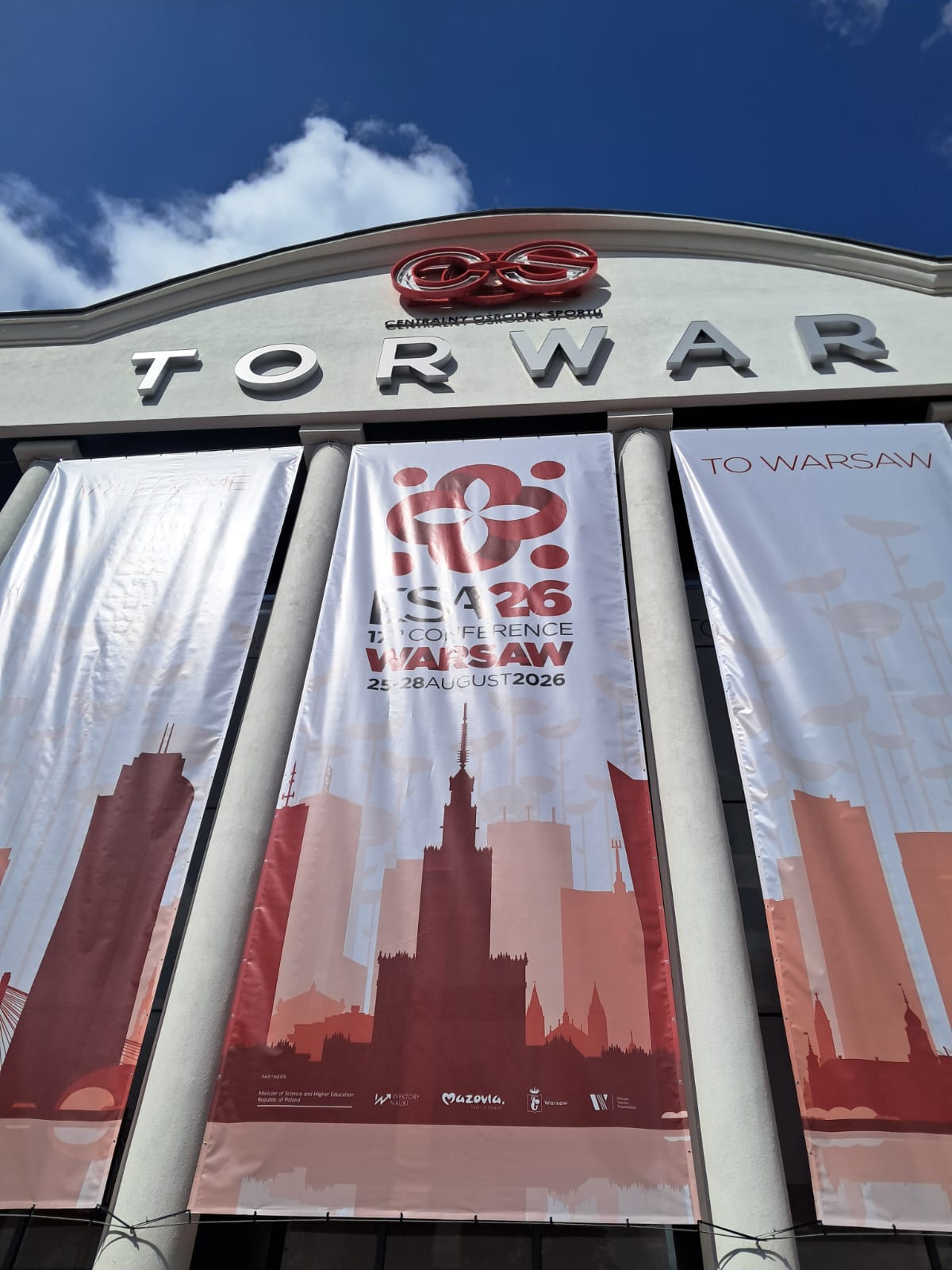

On 18-21 August 2026, the LINEup project was presented at the European Conference for Educational Research (ECER) 2026 in Tampere, Finland. Bringing together almost 4,000 researchers and experts from around the world, ECER provided an important international space for sharing research, discussing new approaches and strengthening collaboration across the educational research community.
LINEup was represented by Veronica Mobilio, Head of Research at Fondazione per la Scuola and Scientific Coordinator of the project, who contributed to two sessions: the symposium “Longitudinal Perspectives on Inequalities in Education”, organised together with sister projects funded under the same Horizon Europe topic, and a dedicated session presenting the LINEup Education Data Explorer.
Bringing together complementary perspectives on educational inequalities
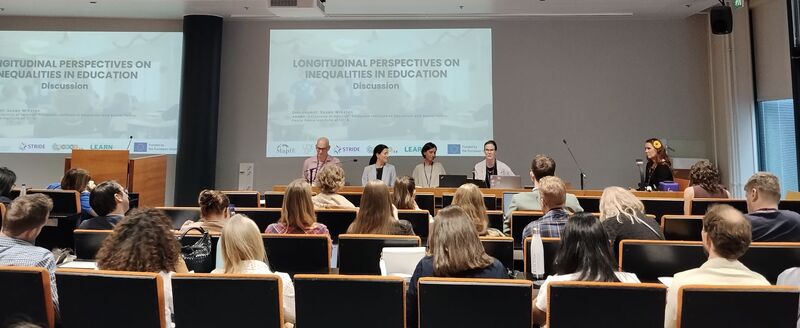
The symposium, organised by MaplE, brought together five Horizon Europe projects working on educational inequalities from complementary longitudinal perspectives: MaplE, LINEup, STRIDE, REVERS-ED and LEARN.
The session provided an opportunity to share emerging findings and approaches across projects and to discuss how different forms of longitudinal evidence can contribute to understanding how educational inequalities emerge and evolve over time. It also highlighted the value of creating spaces for exchange across research initiatives addressing the same broader challenge.
The projects brought complementary perspectives to the symposium. LINEup focused on the availability and analytical potential of longitudinal education datasets across Europe; STRIDE showcased the long-term effects of early childhood education interventions in England and Norway; REVERS-ED examined longitudinal assessment data from Catalonia to explore successful educational practices in vulnerable schools; while LEARN discussed how evidence-based education principles are translated into practice across different national policy contexts. Together, these perspectives contribute to a richer understanding of how educational inequalities emerge, evolve, and can be addressed through research and policy.
During the symposium, Veronica Mobilio presented the LINEup research on “What Longitudinal Education Data Exist in Europe? A Systematic Mapping of Datasets for the Study of Educational Inequalities.” The presentation showcased the results of the project’s mapping activity, which covered 32 European countries and identified longitudinal datasets on student learning outcomes in primary and secondary education. The results highlighted both the richness and the fragmentation of the European longitudinal data landscape, showing substantial differences in data availability, geographical coverage, accessibility, and the types of educational outcomes and contextual information that can be analysed.
The symposium also provided a concrete example of the value of collaboration. Information exchanged with sister projects contributed to identifying datasets that might otherwise have remained difficult to discover, showing how research networks can help make fragmented national data landscapes more visible and strengthen the evidence base for comparative research.
From mapping to infrastructure: the LINEup Education Data Explorer
In a second ECER session, Veronica Mobilio presented “From Mapping to Infrastructure: Enhancing the Reusability of Longitudinal Data Across Europe”, focusing on the LINEup Education Data Explorer. The presentation explored how the project’s mapping exercise has been transformed into an open-access research resource that makes information on existing longitudinal education data easier to discover, understand, compare and reuse.
The LINEup Education Data Explorer brings together standardised metadata on 103 European longitudinal datasets identified through the mapping. Its open-access, map- and list-based interface provides information on datasets covering academic achievement and basic skills, educational trajectories, and contextual and equity-relevant variables. Importantly, the Explorer provides a common entry point to information about the datasets and their accessibility.
The presentation emphasised that the Explorer represents the next step in the LINEup journey: from mapping to infrastructure. By transforming fragmented information into shared and standardised metadata, the tool aims to improve dataset discoverability, comparability and reuse across national and institutional boundaries.
The ECER presentation also offered a live demonstration of the Explorer, showing how users can navigate the map and list views, explore different levels of dataset information, and use filters to identify datasets matching specific research questions and variables.
As LINEup moves towards the final stages of the project, the team is now collecting feedback on the beta version of the Explorer and exploring mechanisms to support its sustainability and continued relevance, including metadata verification and opportunities for future community contributions. Stay tuned for more updates from the LINEup project and explore the LINEup Education Data Explorer to discover longitudinal education datasets across Europe