

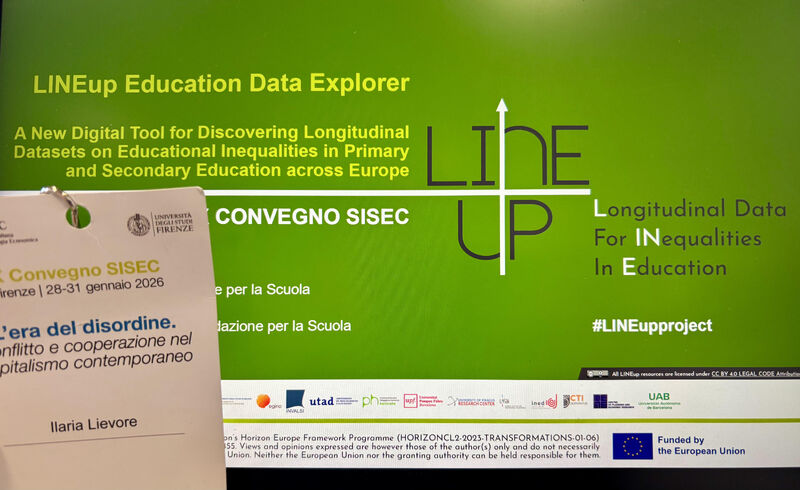
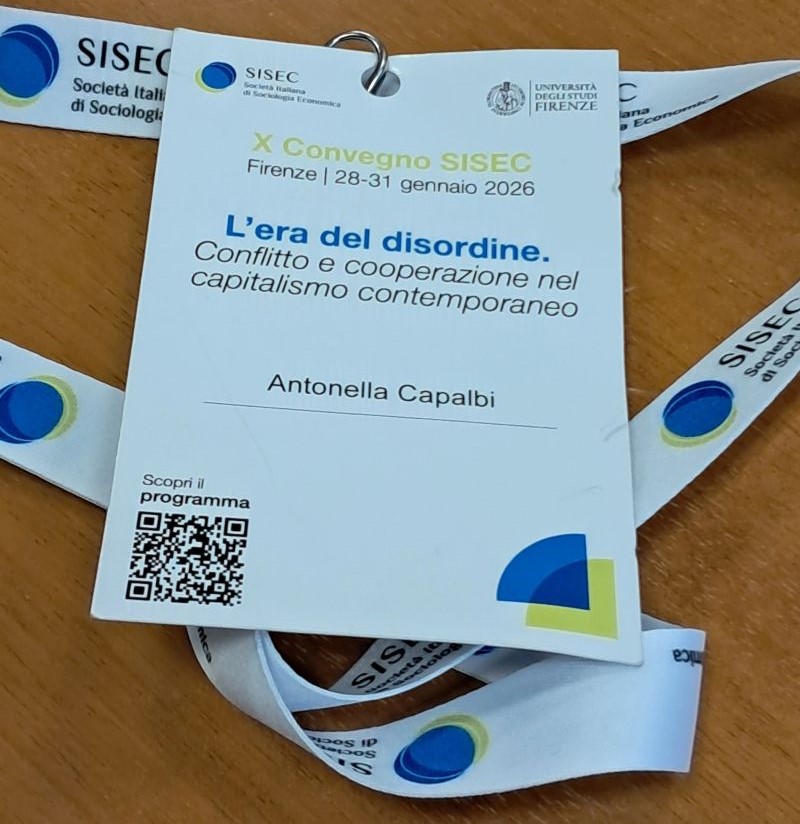
On January 28-30, the LINEup project was presented at SISEC 2026 Annual Conference, hosted by the University of Florence. Two contributions showcased key project developments, focusing on the LINEup Education Data Explorer and the design of the qualitative research.
The conference, one of the main annual meetings for Italian and international sociologists, brought together more than 80 sessions across 10 macro-areas. LINEup contributions were included in the macro-area “Life Trajectories, Education, Stratification, and Inequalities”, which addressed the links between social stratification, educational contexts, family dynamics, and public policies.
In the session “Education and Inequality: Mechanisms, Actors, and Outcomes Across the Life Course”, Ilaria Lievore, researcher at Fondazione per la Scuola (LINEup scientific coordinator), presented the results of the mapping activity that involved all project’s partners in the first half of the project. The mapping was the result of a comprehensive desk research aimed at identifying and describing existing longitudinal datasets on student learning outcomes across 32 European countries. Particular attention was devoted to the LINEup Education Data Explorer, an open-access map- and list-based interface providing access to metadata on 103 national, regional, and local longitudinal datasets tracking student learning outcomes over time in school education (ISCED 1, 2, 3). The Explorer focuses on academic achievement and basic skills, educational trajectories, and contextual and equity-relevant information. It is possible to navigate the interface including filters for detecting datasets with specific characteristics, such as country, type of data, focus, accessibility, type of skills measured, variables included, and so on. Whether you are a researcher, policymaker, educator, or analyst, the Explorer may help you find the right longitudinal data to investigate educational inequalities and long-term learning outcomes.
In the session “Shaping Schools, Shaping Futures: Educational Policies for Equity, Quality and Wellbeing” Antonella Capalbi, researcher at Fondazione per la Scuola, presented the design of the qualitative research, which is structured as a multiple-case study across the six countries involved in the project. The qualitative research aims at examining how school-level practices contribute to reducing disparities in learning outcomes. In each country, nine schools were selected as case studies to capture the interplay between institutional factors, socio-economic context, and educational processes and outcomes, highlighting how teaching practices, school climate, and local education policies can foster student engagement, thereby contributing to more equitable learning opportunities. The presentation focused on the school selection in Italy, which was conducted in close cooperation with INVALSI, by using longitudinal data to identify the nine case studies according to the predefined criteria. Rather than serving merely as background information, INVALSI data were employed as a strategic tool for qualitative design, enabling the selection of cases that capture aligned and contrasting educational realities in a consistent and evidence-based way. The Italian experience demonstrates how longitudinal data can inform the design of mixed-method research and strengthen the comparability of qualitative fieldwork across countries.
As the project approaches its final year, LINEup will move forward along two complementary research streams: a feasibility study on the harmonisation of longitudinal educational data and the collection of qualitative data in selected schools, further deepening the analysis of mechanisms underlying educational inequalities.
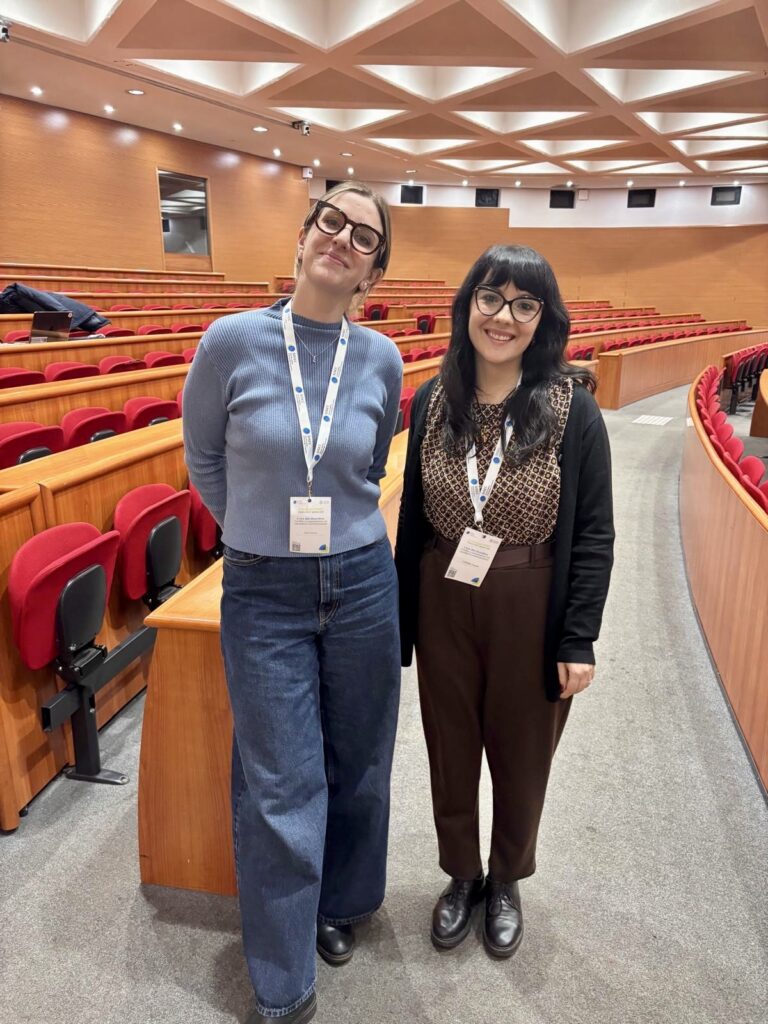
Ph: Ilaria Lievore and Antonella Capalbi, Fondazione per la Scuola